Kagiso Caven Mnski
Systems Biology & Cancer Research
Exploring cancer dynamics through a systems-engineering lens, mapping complex biological processes into actionable frameworks for understanding tumor behavior and therapeutic intervention.
Research Focus
My research applies systems-engineering principles to understand cancer cell dynamics. Rather than viewing cancer as isolated cellular failures, I examine how nine interconnected biological processes create a self-sustaining system that enables tumor survival and progression.
Cancer persists through multiple reinforcing feedback loops. Understanding these interconnections reveals why single-pathway interventions often fail and why multi-system approaches are essential.
By mapping cancer dynamics to controllable biological layers, we can identify intervention points that simultaneously disrupt multiple tumor-supporting processes, shifting the system toward normal tissue regulation.
The Nine Cancer Dynamics
Cancer cell behavior can be understood through nine interconnected dynamics. Each represents a distinct biological process that, when dysregulated, contributes to tumor formation and progression.
Systems Integration
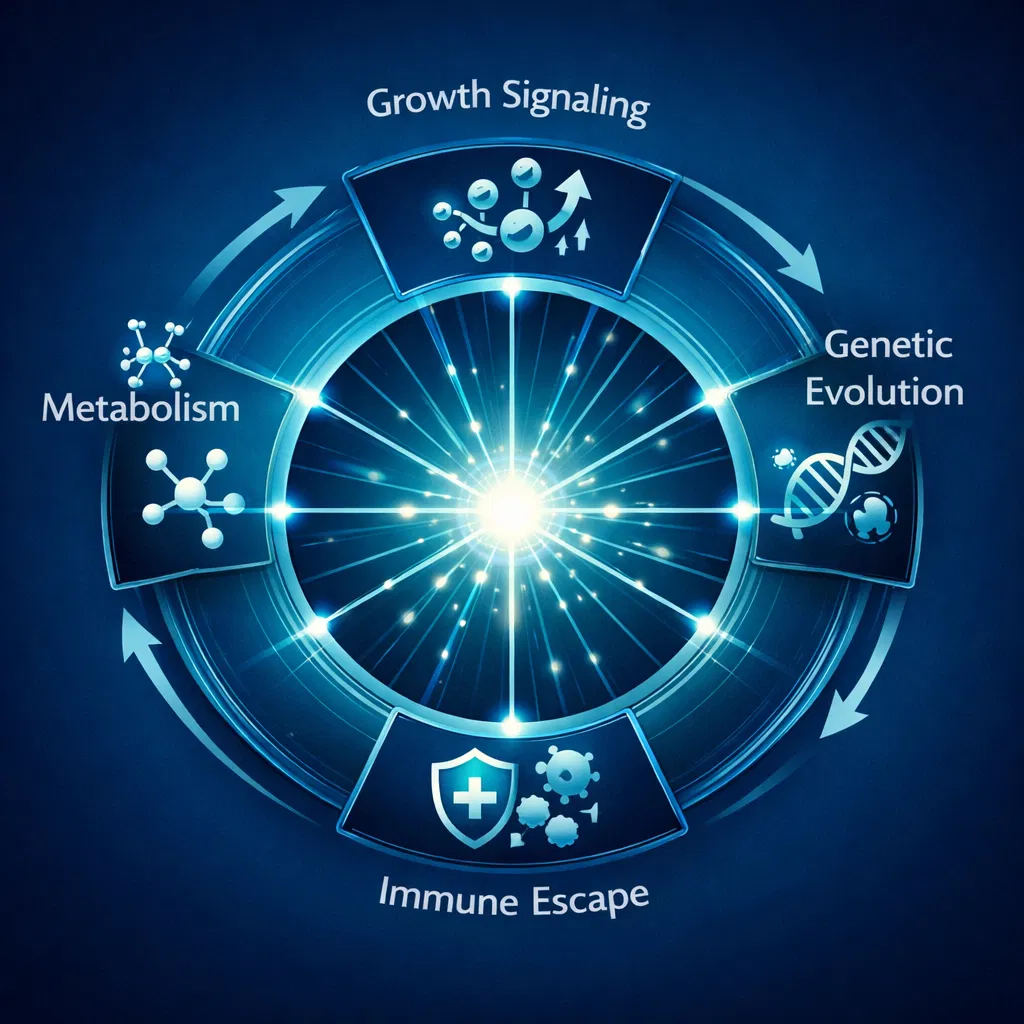
Five Core Engines
Cancer survival depends on five interconnected systems that reinforce each other:
- •
Growth Signaling
Continuous cell division signals
- •
Energy Metabolism
Altered glucose consumption
- •
Genetic Evolution
Rapid mutation accumulation
- •
Tissue Invasion
Barrier breakdown and migration
- •
Immune Escape
Immune system evasion
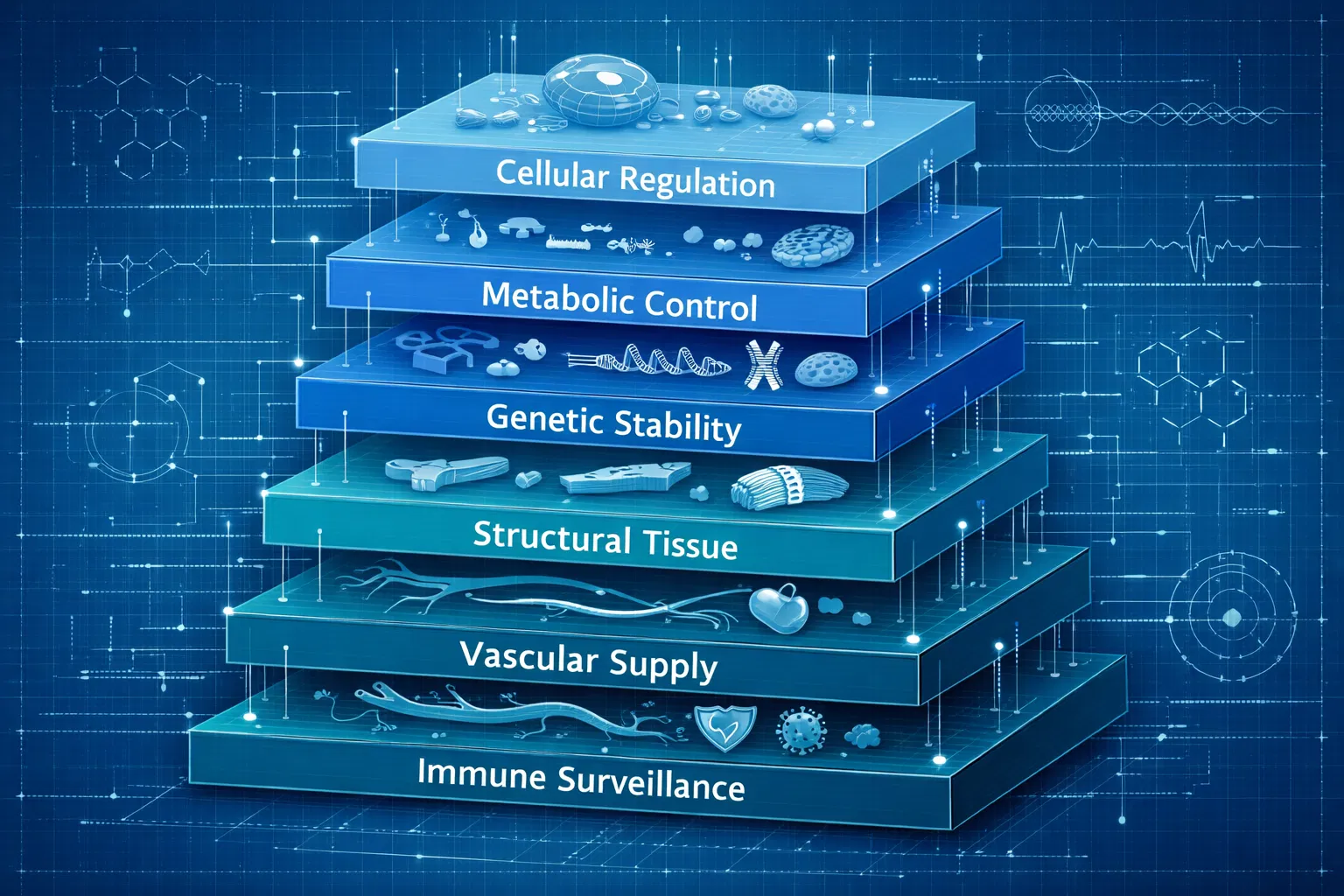
Cancer Modulation Framework
A systems blueprint showing six regulatory layers that correspond to cancer dynamics. Effective therapeutic strategies target multiple layers simultaneously.
Key Insights
Cancer adapts when only one pathway is affected. Effective strategies must simultaneously target multiple biological systems—growth signaling, metabolism, genetic stability, tissue integrity, vascular supply, and immune surveillance.
Cancer cells exist in a stable "attractor state" maintained by reinforcing feedback loops. Therapeutic success requires shifting the biological system from the cancer attractor toward the healthy cell attractor through coordinated interventions.
Rather than only destroying tumor cells, reverse dynamics focuses on restoring healthy biological balance. By reversing the direction of cancer-supporting feedback loops, we can shift the cellular environment back toward normal regulation.
Each cancer dynamic corresponds to specific biological control points. Mapping these correspondences reveals where interventions can collapse the tumor system by addressing multiple dynamics simultaneously.
Get In Touch
Interested in discussing systems biology, cancer research, or potential collaborations?